
Sourdough Pumpkin Cinnamon Rolls

Cozy up with sourdough pumpkin cinnamon rolls with real pumpkin, lots of cinnamon spice and cream cheese frosting.

These sourdough pumpkin cinnamon rolls are soft, fluffy, warmly spiced and basically everything you want to eat on a chilly fall morning. Real pumpkin puree and pumpkin pie spice are mixed right into the sourdough dough, then the rolls are filled with a buttery cinnamon spice filling and toped with cream cheese frosting.
Mix the dough in the evening, give it a few stretch and folds, and let your starter work its magic overnight. In the morning, all thats left is filling, rolling, and baking.

Why you’ll love this recipe
- Real pumpkin flavor: Pumpkin puree goes directly into the dough along with pumpkin pie spice, so these don’t just taste like regular cinnamon rolls!
- Mostly hands off: There are a few stretch and folds in the evening, but your sourdough starter handles most of the work while the dough ferments overnight.
- Perfect for fall mornings: Soft pumpkin-spiced rolls, buttery cinnamon filling, and cream cheese frosting. Add coffee and a blanket and there’s no reason to leave the house, right?
Try all the pumpkin flavored goodies this fall! Pumpkin sourdough quick bread is a great way to use your starter in a classic favorite. Pumpkin spice sourdough donuts are a fun way to spice up breakfast are a simple baked recipe. And pumpkin spice sourdough bagels are such a delicious fall recipe to enjoy!
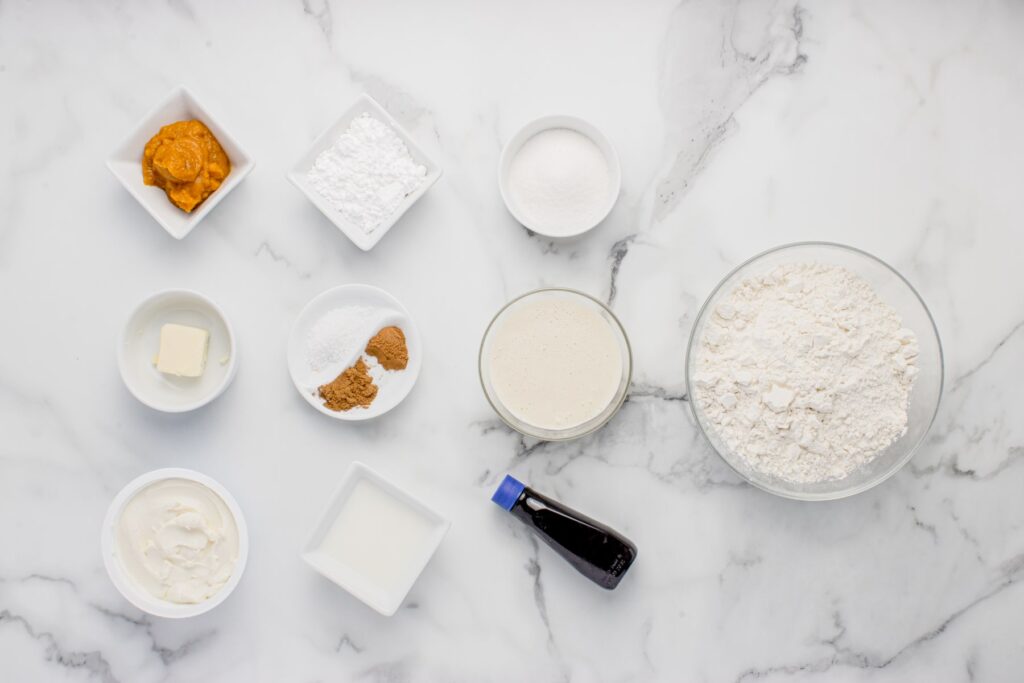
How to make this recipe
Here is a brief overview of how to make these sourdough pumpkin cinnamon rolls so you know what to expect when you start baking. For the full set of written directions, including ingredient amounts, please scroll down to the recipe card below.
Step One: Activate your starter
There is no yeast in this recipe, so we want to make sure you have a strong, active starter for this recipe. Feed your sourdough starter and wait until it’s bubbly, active, and close to doubling before mixing the dough.
Having a strong starter is important when working with enriched dough. The butter, sugar, pumpkin and milk will make the dough soft and delicious, but also slow fermentation down.
Step Two: Mix the dough
In the bowl of a stand mixer, combine the wet ingredients for the dough. Add in the dry ingredients and mix until a cohesive dough forms and you don’t see any obvious pockets of dry flour.
Cover the bowl and allow the dough to rest for 30 minutes.


Step Three: Stretch and folds
After the dough has rested, perform 2-3 rounds of stretch and folds, spacing them about 30 minutes apart.
To perform a stretch and fold, dampen your hands slightly with water and gently grab one side of the dough. Stretch it upwards without tearing it, then fold it over to the center of the bowl. Rotate the bowl 90 degrees and repeat until you have folded all four sides.
As you work, you should notice the dough becoming smoothers and better able to hold its shape. Cover the dough again in between sets of stretch and folds.


Step Four: Overnight Fermentation
Cover the bowl tightly and leave at room temperature to bulk ferment overnight. This will take about 8-12 hours, but make sure you watch the dough here, and not the clock. It will be ready when it has a smooth surface, looks puffy, feels aerated and has some visible bubbles around the edges. It may also jiggle slightly when you gently shake the bowl. It will not necessarily double in size.


Step Five: Assemble the rolls
In a small bowl, combine the ingredients for the cinnamon filling until you have a soft, spreadable paste.
Lightly flour your work surfaced and turn out the fermented dough. Gently use a rolling pin to roll the dough into a rectangle about 12×15 inches.
Spread the filling evenly over the dough, leaving about a 1/2″ border around the edges.
Starting along one of the 15″ sides, gently roll the dough into a log. You want the roll to be snug without pulling too tightly on the dough. Gently pinch the seam closed.
Cut the log into 10 equal rolls, about 1.5″ thick.
Lightly butter a 9×13 oven safe baking dish and arrange the rolls cut side up in it. Leave a little space in between the rolls so they can expand during their final rise. Loosely cover the pan.


Step Six: Final proofing
Let the shaped cinnamon rolls rise at room temperature for 1-3 hours, or until they look noticeably puffy, feel soft and airy, and are beginning to touch one another. If you lightly press one with your finger, the indentation should slowly spring back.
Step Seven: Bake
Preheat oven to 350 F.
Bake the cinnamon rolls for 25-30 minutes, or until they’re puffed, lightly golden on top and cooked through in the center. If you use an internal thermometer to check the temperature, it should be about 190-200 F.
If the tops are browning too quickly before the centers are finished, loosely cover the pan with foil for the remainder of the baking time.


Step Eight: Frost
While the cinnamon rolls cool, make the frosting by beating the softened butter and cream cheese together until smooth. Add in the powdered sugar and vanilla and mix until combined.
Then add the milk, one tablespoon at a time, utilizing the frosting reaches the consistency you like. Use less milk for a thick, spreadable frosting or a little more for something you can drizzle over the rolls.
Spread the frosting over the cinnamon rolls while they are still a little warm, the frosting will soften and work its way into all the swirls that way.

Storage Info:
Because of the cream cheese frosting, store leftover frosted cinnamon roll sin the fridge in an airtight container for about 4-5 days.
Freezing:
- Before baking: After shaping and cutting, arrange the rolls on a parchment lined tray and freeze until solid. Transfer the frozen rolls to a freezer safe container and use within a month. Thaw overnight in the fridge, bring to room temperature and allow them to finish proofing until tehy are soft and puffy before baking as directed.
- After baking: Freeze before frosting when possible. Cool complete, then warp individually and place in a freezer safe container. Freeze for 2-3 months. Thaw overnight in the fridge or at room temperature, reheat gently and then add frosting.

Baker’s Schedule
This timeline is designed for a flexible, overnight fermenting. You can adjust the timing to fit your schedule.
Day One:
- Mix the dough – 30 minutes
- Stretch and folds – 1 hour 30 minutes
- Bulk Fermentation at room temperature – 8 to 12 hours
Day Two:
- Roll, fill and shape – 30 minutes
- Final rise – 1 to 3 hours
- Bake – 25 to 30 minutes
- Cooling before frosting – 10 minutes
Remember to the watch the dough, not the clock while making this recipe. Times can vary based on the temperature and humidity of your house.

Sourdough is better when shared
If you try this recipe, let me know! Leave a comment and rating below.
Love and links are always appreciated! If you’d like to share this recipe, please link to the post directly for the recipe, please do not copy and paste or screenshot. Thank you so much for supporting me. XOXO – Jenni
Sourdough Pumpkin Cinnamon Rolls
Ingredients
Method
- Feed your starter and use it when it is bubbly, has risen significantly, and is at or near its peak. A starter that doubles or triples in volume after feeding is perfect for this recipe.
- In a large mixing bowl, combine the butter, pumpkin puree, active sourdough starter, milk, sugar, flour, pumpkin pie spice, and salt.
- Mix them all using a stand mixer or even your hands until a dough forms and there are no obvious pockets of dry flour.
- Place a lid or plate over the bowl and let the dough rest for 30 minutes.
- Do 2–3 rounds of stretch and folds, about 30 minutes apart. To do a stretch and fold: With damp hands, take one side of the dough. Gently stretch it up without tearing it. Fold it over the middle of the dough. Turn the bowl 90 degrees. Do this on all four sides. As the dough develops strength, it should become smoother and hold its shape better.
- Cover the bowl tightly and leave the dough at room temperature overnight. Because this is a pure sourdough recipe, the fermentation time will depend heavily on your kitchen temperature and the strength of your starter. Allow approximately 8–12 hours, but use the dough (not the clock) as your guide. The dough is ready when it: Looks noticeably larger and puffy Has a smoother surface Feels lighter and aerated Has visible bubbles around the edges Jiggles slightly when the bowl is gently shaken It doesn’t need to double in size. Important: If your kitchen is very warm, the dough may ferment much faster. If your kitchen is cool, it may take a little longer.
- In the morning, lightly flour your work surface. Transfer the fermented dough onto the surface.
- Gently press the dough down to release some of the larger air pockets. Don’t aggressively punch it down.
- Using a rolling pin, roll the dough into a 12 × 15-inch rectangle, keeping the thickness as even as possible.
- In a small bowl, combine the softened butter, sugar, pumpkin pie spice, and cinnamon. Mix them all until you have a soft, spreadable paste.
- Spread the filling evenly over the dough, leaving approximately ½-inch border around the edges.
- Starting at one of the 15-inch edges, gently roll the dough into a log. Roll it firmly enough to create a tight spiral, but don’t compress the dough. Continue rolling until you have a log approximately 15 inches long.
- Pinch the seam closed when you reach the end.
- Cut the log into 10 equal pieces. For the cleanest cuts, use unflavored kitchen string or dental floss. Slide the string underneath the log. Bring both ends upward, cross them over the top of the dough, and pull in opposite directions. Cut the log into 10 equal rolls, approximately 1½ inches thick each. For the most consistent rolls, use a ruler to mark the log before cutting.
- Lightly butter an oven-safe pan or skillet. Arrange the 10 rolls, cut-side up, leaving a little space between the rolls. They will expand considerably during the second rise and should eventually begin touching. Cover them loosely.
- Allow the shaped rolls to rise at room temperature for approximately 1–3 hours. The rolls are ready to bake when they are noticeably puffy, soft and airy and beginning to touch each other and slightly jiggly when the pan is gently moved. They don’t necessarily need to double in size. If you gently press the dough with a fingertip, the indentation should slowly spring back.
- Preheat the oven to 350°F (175°C).
- Bake the rolls for 25–32 minutes, or until they are lightly golden brown on top and cooked through in the center. For the most reliable result, check the center with an instant-read thermometer. Aim for 190–200°F (88–93°C). The rolls should look puffed and set, with lightly golden tops, and the center should no longer look wet or doughy. A finished roll will also feel soft and springy when you press it gently. Don’t overbake your rolls. The goal here is soft, tender cinnamon rolls, not dry bread. If the tops begin browning too quickly, loosely cover the pan or skillet with aluminum foil for the rest of the baking time.
- While the rolls cool, beat the butter and softened cream cheese together until they become smooth.
- Add the powdered sugar and vanilla and mix them all until they are combined.
- Add the milk, 1 tablespoon at a time, until the frosting gets to your preferred consistency. Adjust the milk amount to get to your desired consistency: use less for a thicker spread or a bit more for a pourable drizzle. If you happen to have any lumps, gently microwave the mixture in short 5–10 second bursts, whisking thoroughly between each burst to get a smooth finish.
- Spread the cream cheese frosting on top of the rolls. The warmth of the rolls will soften the frosting slightly and allow it to settle into the swirls.


