
Sourdough German Rye Bread

German sourdough rye bread with a chewy texture, crisp crust, and rich tangy flavor. A hearty loaf perfect for sandwiches, toast, and soups.

This German sourdough rye bread is hearty, flavorful, and deeply satisfying. Made with rye flour and sourdough starter, it has a chewy texture, a crisp crust, and the signature tang that makes rye bread so beloved throughout Germany and Eastern Europe.
Unlike a classic white sourdough loaf, rye bread is naturally denser and more substantial. That’s part of what makes it so wonderful. It holds up beautifully to butter, cheese, smoked meats, soups, and open-faced sandwiches.
If you’re ready to branch out from traditional sourdough and explore something with a little more depth and character, this German rye bread is a great place to start.

Why you’ll love this recipe
- Rich, complex flavor – Rye flour and sourdough create a deep, slightly tangy taste.
- Hearty and satisfying – Perfect for sandwiches, toast, and serving alongside soups.
- A fun way to expand your baking skills – A great introduction to baking with rye flour.
German rye bread, or Roggenbrot, contains a much higher percentage of rye flour than many American rye breads.
Because rye contains less gluten than wheat flour, the dough behaves differently and produces a denser loaf with a tighter crumb. That’s completely normal and exactly what gives rye bread its characteristic texture.
The result is a loaf that stays moist, slices beautifully, and develops even more flavor over the first day or two after baking.
If you enjoy exploring different grains and flavors, try seeded sourdough bread for another hearty loaf packed with texture. Sourdough sandwich bread is a softer everyday option, while jalapeño cheddar sourdough offers a completely different flavor experience with melty cheese and a little heat.
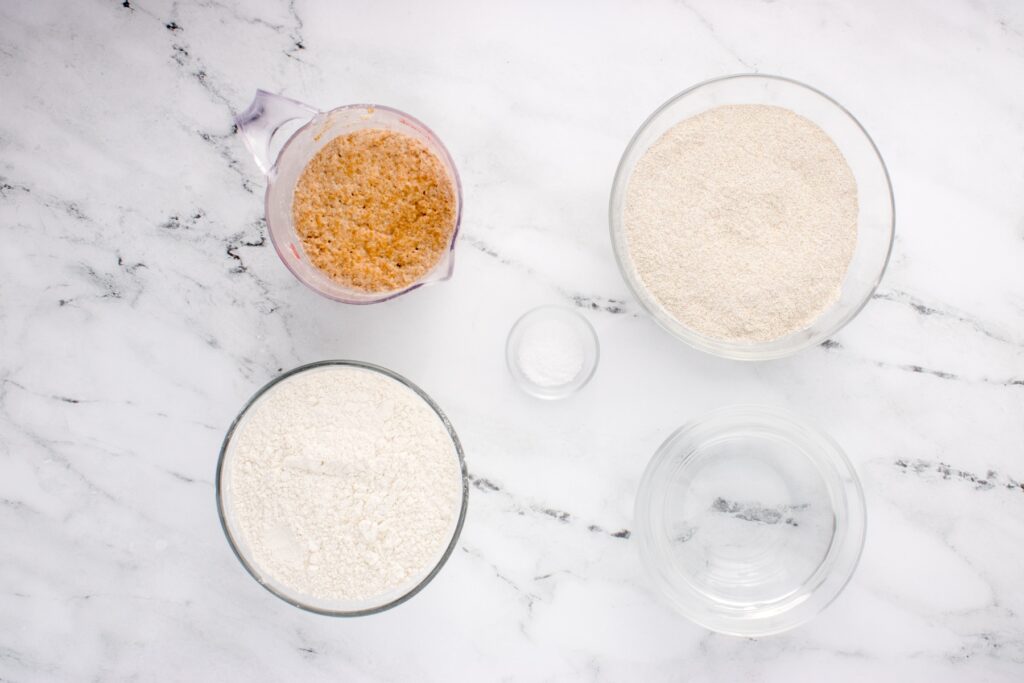
How to make this bread
Here is a brief overview of the process to make this loaf so you know what to expect. For the full set of written directions, please scroll down to the recipe card below.
Step One: Make the dough
Combine the rye flour, all-purpose flour, water, salt, and active sourdough starter in a large bowl.
Mix until all the flour is hydrated and a sticky dough forms.
Step Two: Rest the dough
Cover the bowl and allow the dough to rest for 1 hour. This gives the rye flour time to fully absorb the water and begin developing structure.
Step Three: Stretch and folds
Perform a set of stretch and folds every 30 minutes for 2–3 hours. The dough won’t feel as elastic as a white sourdough dough, and that’s perfectly normal.


Step Four: Bulk fermentation
Cover the bowl and allow the dough to rise until it has increased in volume by about 30–50%. This usually takes 5–8 hours depending on the temperature of your kitchen. Once the dough has finished bulk fermentation and increased in volume, you can place the covered bowl in the refrigerator overnight.
Step Five: Shape the loaf
In the morning, remove the dough from the fridge and let it sit at room temperature for 30–60 minutes before shaping.
Shape the dough into a round loaf and place it into a floured banneton or proofing basket. Cover and allow it to proof until it looks slightly puffy.
Step Six: Final Proof
Allow the dough to rise at room temperature for 2-3 hours. The loaf won’t double dramatically, but it should feel lighter and show signs of fermentation.
Step Seven: Bake
Preheat a Dutch oven to 500°F.
Turn the dough onto parchment paper, score the top, and carefully transfer it into the hot Dutch oven. Bake covered for 20 minutes.
Reduce the temperature to 450°F and continue baking for 40–50 minutes until deeply browned.
Allow the bread to cool for at least 2 hours before slicing. Rye bread continues setting as it cools, and slicing too early can lead to a gummy texture.


Baker’s Schedule
This timeline is designed for a flexible, overnight fermentation. You can adjust the timing to fit your schedule, but this gives a general idea of what to expect.
Day One
- Mixing the dough – 15 minutes
- Autolyse – 1 hour
- Stretch and folds – 2 to 3 hours
- Bulk fermentation – 5 to 8 hours
- Overnight cold fermentation – 8 to 12 hours
Day Two
- Removing dough from the fridge and resting – 30 to 60 minutes
- Shaping the loaf – 15 minutes
- Final proof – 2 to 3 hours
- Preheating the oven and Dutch oven – 30 minutes
- Baking – 60 to 70 minutes
- Cooling time – At least 2 hours before slicing
Remember to watch the dough and not the clock! The timing of sourdough recipes depends a lot on the temperature and humidity levels of your house.

Storage
Store the loaf wrapped at room temperature for up to 3 days.
For longer storage, refrigerate for up to 1 week or freeze for up to 3 months.
Sourdough is better when shared
If you try this recipe, let me know! Leave a comment and rating below.
Love and links are always appreciated! If you’d like to share this recipe, please link to the post directly for the recipe, please do not copy and paste or screenshot. Thank you so much for supporting me. XOXO – Jenni
Sourdough Rye Bread
Ingredients
Method
- Mix the dark rye flour and all-purpose flour, and add warm water, salt, and the active sourdough starter to it.
- Mix these ingredients together in a large bowl with a wooden spoon or stand mixer with a dough hook.
- Cover the bowl and allow it to autolyse on the counter for 1 hour to fully hydrate the flours and develop gluten.
- Perform stretches and folds on the dough every 30 minutes for 2-3 hours.
- Cover the bowl with plastic wrap and allow it a bulk fermentation time of 5-8 hours depending on the temperature of your kitchen. Look for the dough to increase in volume by about 30-50%.
- Cover the bowl and place in the fridge overnight.
- In the morning, allow the dough to come to room temperature for 30-60 minutes before shaping.
- Shape the dough into a ball on a clean, flat work surface and place it in a banneton or floured-proofing basket.
- Cover with plastic wrap or a plastic bag and proof the dough at room temperature until the dough rises and is slightly puffy. The exact time can vary, but it usually takes 2-3 hours.
- Place your dutch oven with a lid on in your oven and then preheat the oven to 500°F.
- Carefully remove the dutch oven from the preheated oven with oven mitts. Turn the dough out onto parchment paper.
- Score the top with a pattern of your choice and place it in the hot Dutch oven.
- Return the Dutch oven back to the oven and bake at 500°F for 20 minutes.
- Reduce the temperature to 450°F and bake for 40-50 minutes more or until the bread has a golden or dark-brown crust. You can cook it for less time for a lighter rye bread. The bread is ready when it reaches an internal temperature of 208°F or more, and it sounds hollow when tapped on the bottom.
- Cool the bread completely on a wire rack before slicing. I recommend waiting for at least 2 hours for the best texture and moisture distribution.
- Enjoy


