
Sourdough French Bread

Sourdough French bread with a crisp crust and soft, fluffy interior. An easy recipe perfect for sandwiches, butter, or serving with soups.

This sourdough French bread has everything you want in a homemade loaf! A crisp, golden crust and a soft, fluffy interior that’s perfect for slicing, dipping, or slathering with butter.
It’s a wonderful next step once you’ve made a basic sourdough loaf and want to practice shaping without jumping into anything too complicated. You’ll get that classic “bakery-style” look and texture, but with a process that still feels approachable and doable at home.
The flavor is lightly tangy from the sourdough starter, but still very much that classic French bread taste. Its simple, comforting, and incredibly versatile.

Why you’ll love this recipe
- Crispy outside, soft inside – That classic French bread texture you love
- A great next step in sourdough – Perfect for practicing shaping skills
- Versatile and family friendly – Great with butter, soups, or even French toast
If you’re working on shaping and building confidence with sourdough, there are plenty of other recipes to try next. My sourdough breadsticks are a great beginner-friendly option, while sourdough hamburger buns give you soft, structured rolls perfect for sandwiches. And if you’re ready to keep practicing shaping, sourdough baguettes are a fun next challenge.
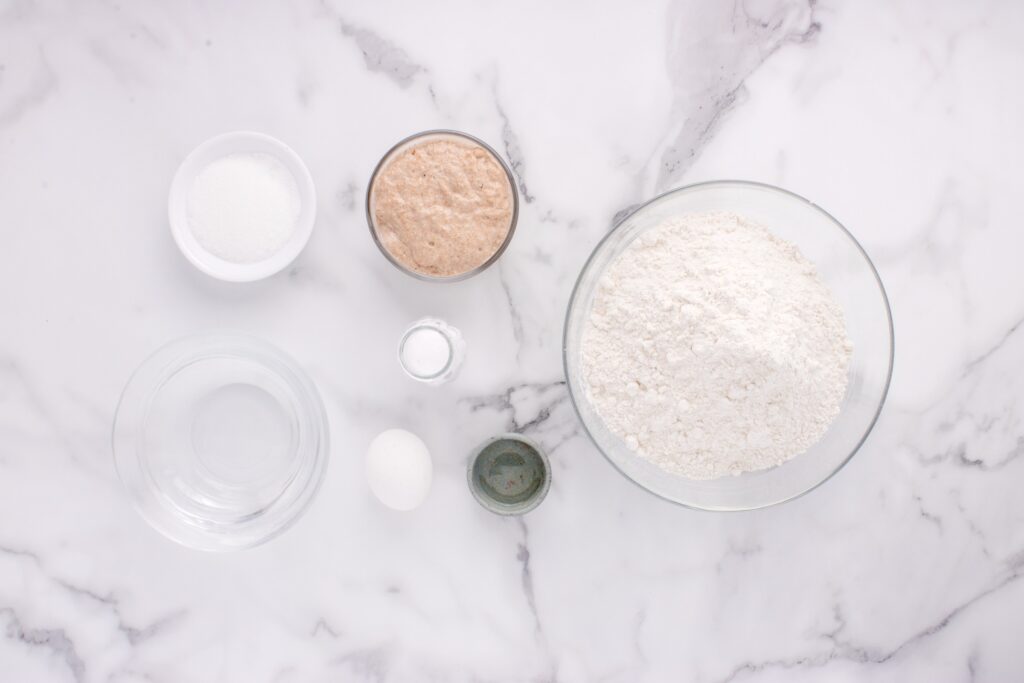
How to make this recipe
Here is brief overview of the baking process so you know what to expect before you get started. For the full set of written directions and ingredient amounts, please scroll down to the recipe card below.
Step One: Mix the dough
Mix all the ingredients together until a shaggy dough forms. Cover the bowl and let it rest for 30 minutes. This gives the flour time to hydrate and makes the dough easier to work with.


Step Two: Stretch and Folds
Using lightly wet hands, stretch one side of the dough up and fold it over itself. Rotate the bowl and repeat on all four sides.
Cover and rest the dough for 30 minutes, and then repeat this process for a total of four sets over two hours. By the end, the dough should feel smoother and be sightly tacky.


Step Three: Bulk fermentation
Cover the dough and let it rest at room temperature for 8-12 hours, or until it looks puffy and has risen noticeably.


Step Four: Shape the loaves
Divide the dough into two equal pieces.
Gently shape each piece into a ball, then flatten into a rectangle about 13 inches long. Roll each rectangle into log, pinching the seam to seal. Handle the dough gently to keep the air bubbles.


Step Five: Final proof
Place the loaves seam side down on a parchment lined baking sheet. Cover and let rise for 1-2 hours, until doubled in size. The dough is proofed when you gently press it and it slowly springs back.


Step Six: Bake
Preheat the oven to 400 F with a metal pan on the bottom rack.
Brush the loaves with egg wash and score the tops with a sharp knife. Add ice to the pan below to create steam, then bake the loaves for 17-20 minutes, until the crust is golden brown and they sound hollow when happed. Let cool completely before slicing.


Baker’s Schedule
This timeline is designed for a flexible, overnight fermentation. You can adjust the timing to fit your schedule, but this gives a general idea of what to expect. Remember to watch the dough and not the clock, timing can vary depending on the temperature and humidity of your kitchen.
Day One
- Mixing the dough – 10 minutes
- Rest (autolyse) – 30 minutes
- Stretch and folds – 2 hours (4 sets, spaced 30 minutes apart)
- Bulk fermentation – 8 to 12 hours
Day Two
- Dividing and shaping – 10–15 minutes
- Final proof – 1 to 2 hours
- Preheating the oven and steam pan – 30 minutes
- Scoring and baking – 17–20 minutes
- Cooling time – At least 1 hour before slicing

Tips for the best French bread
- If your dough feels sticky, use lightly wet hands instead of adding more flour.
- Steam in the oven helps create that crisp crust, but you can skip it if you prefer a softer exterior.
- If your dough isn’t rising well, it usually just needs more time or a warmer spot.
- Always let the bread cool fully before slicing to avoid a gummy texture.
Storage and Reheating
Store the loaves wrapped at room temperature for up to 3 days, or freeze for up to 1 month.
To reheat, warm in a 350°F oven for 10–15 minutes. Lightly misting the crust with water helps bring back that fresh-baked texture.

Sourdough is better when shared
If you try this recipe, let me know! Leave a comment and rating below.
Love and links are always appreciated! If you’d like to share this recipe, please link to the post directly for the recipe, please do not copy and paste or screenshot. Thank you so much for supporting me. XOXO – Jenni
Sourdough French Bread
Ingredients
Method
- Feed your sourdough starter with equal parts of flour and water by weight and then leave it at room temperature for 4-12 hours until it is active and bubbly. I used 100g of water and 100g of flour for this recipe.
- In a large mixing bowl, mix all-purpose flour, warm water, salt, sugar, active starter, and olive oil until the dough forms.
- Cover the bowl and let it rest for 30 minutes.
- Wet your hands to prevent sticking, then gently stretch one side of the dough and fold it over the center. Repeat this for all four sides then let it rest for 30 minutes.
- Repeat this set of stretch and folds 3-4 times over 2 hours.
- Cover the bread dough and then let it rise for 8-12 hours. You can leave it in a warm place or place it in the fridge overnight for slow fermentation.
- Divide the dough into two parts.
- Shape each part into a tight ball, and then flatten and roll each of them into a 13″ long rectangle.
- Roll each rectangle into a long log, pinching the seams firmly.
- Place the dough logs seam side down on a baguette pan or cookie sheet lined with parchment paper.
- Cover them with a light damp towel and let them proof in a warm spot for 1-2 hours until they double in size.
- Preheat your oven to 400°F (200°C).
- Whisk the egg and water to make the egg wash.
- Brush the wash onto each dough log and then using a razor blade or sharp knife make horizontal or diagonal cuts down each log.
- Place a tray of ice cubes on the bottom rack of the oven or spray water using a spray bottle to create steam which will help the bread rise.
- Bake the bread for 17-20 minutes until they turn golden brown and hollow-sounding when tapped.
- Allow the French sourdough bread to cool on a wire rack all the way before slicing.


I really loved making this and it was so delicious! And i particularly love the parchment paper trick! Coz I find couche’s pretty expensive.
I need the sourdough starter recipe please.
Hi Diana! You can find information on how to make a sourdough starter on my post for that here – https://sourdoughsurprises.com/make-a-sourdough-starter/