Ingredients
Method
- In a large bowl, whisk together the light brown sugar, softened butter, oil, and granulated sugar for about 60–90 seconds, until smooth and glossy. The mixture will look like a thick paste rather than light and fluffy.
- Add the sourdough discard, egg, molasses, and vanilla extract. Whisk until fully combined and smooth.
- In a separate bowl, whisk together the flour, cinnamon, baking soda, salt, and nutmeg.
- Add the dry ingredients to the wet ingredients and switch to a spatula. Mix until just combined, then fold in the oats. The dough should feel soft but scoopable, not loose.
- Scoop about 2 tablespoons of dough and roll into balls. Place on a parchment-lined baking sheet, leaving space for spreading. Gently press the tops just slightly to form thick discs, keeping the edges rounded. Do not flatten too much.
- Cover and refrigerate the shaped dough for at least 60 minutes. For best results, the dough can be refrigerated overnight for thicker cookies and more developed flavor.
- When ready to bake, preheat the oven to 350°F.
- Bake for 9–11 minutes, until the edges are set and the centers still look slightly soft. Do not overbake.
- Let cool on the baking sheet for 5 minutes before transferring to a wire rack to cool completely.
- While the cookies cool, make the filling.
- Beat the butter until smooth. Add powdered sugar and mix until fluffy. Add the marshmallow fluff, vanilla bean paste, and salt, then beat until light and creamy.
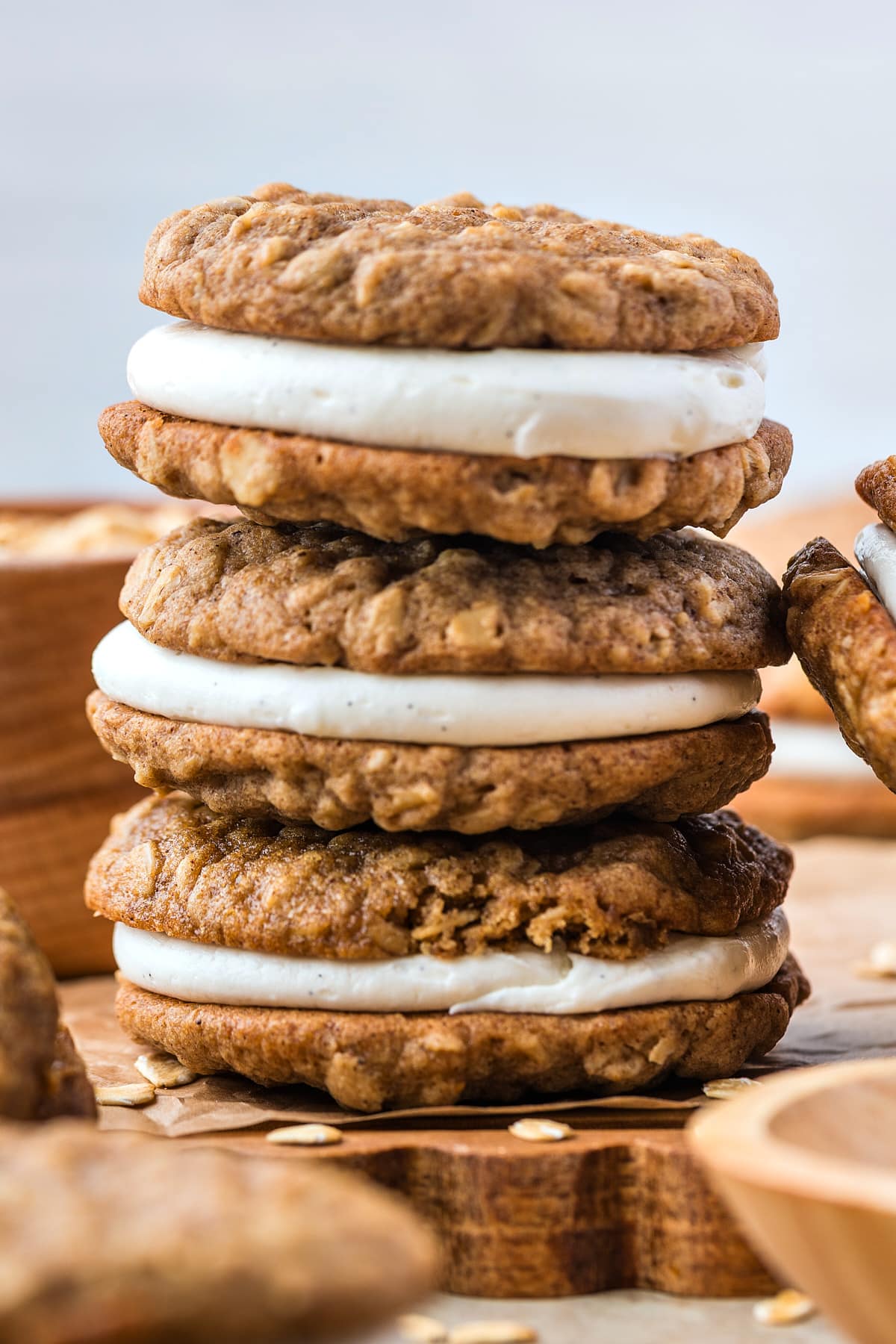
- Transfer the filling to a piping bag (no tip needed) and pipe a swirl onto the flat side of one cookie. Top with another cookie and gently press to sandwich. If you prefer, you can also use an offset spatula or spoon to spread the filling evenly over the cookie instead of piping.
Nutrition
Notes
For best results, use sourdough discard that is only a few days old. Older or very liquid discard can cause the cookies to spread more than intended. If your discard is on the runnier side, you can add 1–2 tablespoons of additional flour to help the dough hold its shape.
The dough should feel soft but scoopable. If it feels too loose to roll, let it chill briefly before shaping. Chilling the dough is important in this recipe and helps control spread while giving you thicker, softer cookies. For best results, chill the dough for 45–60 minutes, or refrigerate overnight for even better texture and flavor.
When shaping, gently press the dough just slightly to form thick discs while keeping the edges rounded. Avoid flattening too much, as this can cause the cookies to spread too thin.
Bake just until the edges are set and the centers still look slightly soft. The cookies will continue to set as they cool, and this is what gives them that soft, chewy texture.
Vanilla bean paste is recommended for the filling because it adds a richer flavor, but vanilla extract works just fine if that’s what you have on hand.
For filling, piping a swirl (using a piping bag without a tip) helps distribute the frosting evenly and prevents the cookies from breaking when sandwiching. If you prefer, you can also spread the filling with a spoon or offset spatula for a more rustic look.
For the best presentation, pair cookies of similar size before filling.
